Hot Wallet vs Cold Wallet: Which Is Right for You?
Educational content · reviewed for accuracy · not financial advice
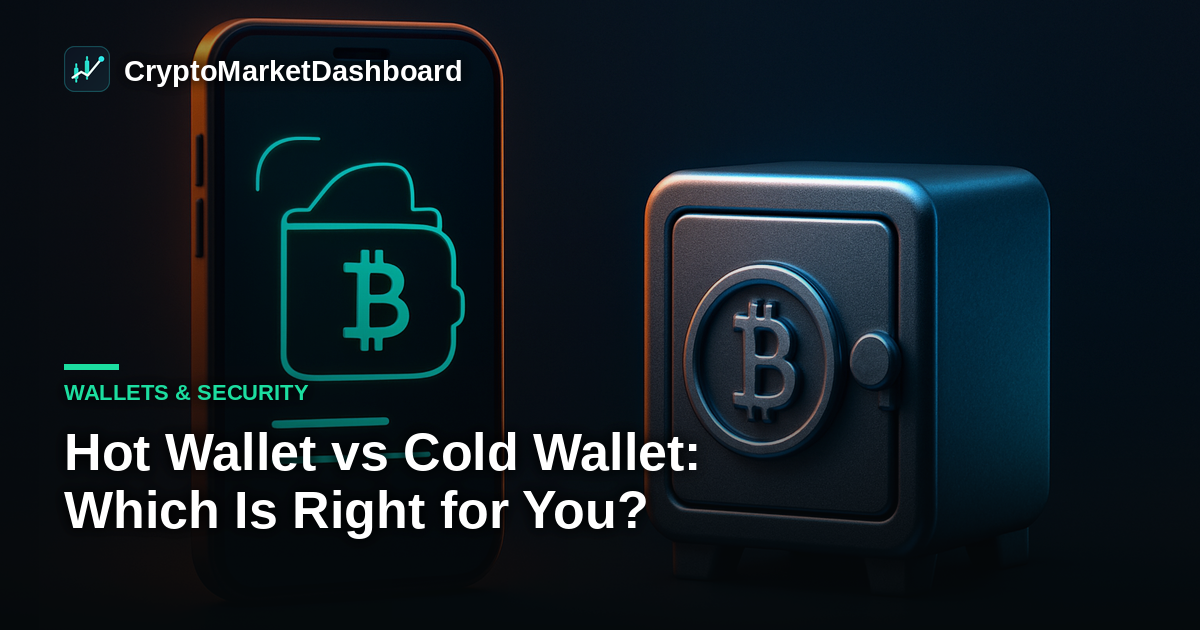
A hot wallet stays connected to the internet — convenient but more exposed to hacks. A cold wallet stores your keys offline — less convenient but far harder to compromise. Most people use both: a hot wallet for small, everyday amounts and a cold wallet for long-term savings.
On this pagetoggle
A hot wallet is any crypto wallet that stays connected to the internet. A cold wallet keeps your private keys completely offline. That single distinction — online versus offline — is what determines how convenient, and how risky, each option is.
If you are new to storing crypto, understanding this difference is one of the most important things you can do before putting real money at risk.
What Makes a Wallet "Hot"?
A wallet is "hot" simply because it runs on a device with an active internet connection. That includes:
- Exchange wallets — the balance shown on platforms like Coinbase, Kraken, or Binance. You do not hold the private keys; the exchange does. This makes exchange wallets custodial by definition.
- Mobile wallets — apps installed on your smartphone (MetaMask mobile, Trust Wallet, Exodus).
- Browser extension wallets — plugins that live inside your web browser (MetaMask desktop, Phantom for Solana).
- Desktop wallets — software installed on a laptop or PC that connects online to sync.
Hot wallets are designed for speed and convenience. You can send a transaction in seconds, connect to a decentralised app, or check your balance without any extra steps.
The downside is exposure. Any device connected to the internet can be targeted by malware, phishing sites, or compromised browser extensions. If an attacker reaches your device, they may be able to extract your private keys or seed phrase.
What Makes a Wallet "Cold"?
A cold wallet (also called cold storage) keeps private keys on a device or medium that never touches the internet. Common types include:
- Hardware wallets — dedicated physical devices (Ledger, Trezor) that sign transactions internally without exposing your keys to the computer they are plugged into.
- Paper wallets — your keys or seed phrase printed or hand-written on paper and stored physically.
- Air-gapped computers — machines that have never connected to the internet, used solely to generate and store keys.
Because cold wallets are offline, a remote attacker has no network path to your keys. Even if your main computer is fully compromised, the funds in cold storage remain safe as long as the physical device is secure and your seed phrase is private.
For a broader overview of the full wallet landscape, see types of crypto wallets.
Hot vs Cold Wallet: Side-by-Side Comparison
| Feature | Hot Wallet | Cold Wallet |
|---|---|---|
| Internet connection | Always connected | Offline / air-gapped |
| Ease of use | Very easy | Requires extra steps |
| Transaction speed | Instant | Seconds to minutes to sign |
| Cost | Usually free | Hardware device costs $50–$200+ |
| Hack risk (remote) | Higher | Very low |
| Physical loss risk | Lower (cloud backup possible) | Higher if device/paper lost |
| Best for | Everyday spending, small amounts | Long-term savings, large holdings |
| You control the keys? | Not always (exchanges don't give you keys) | Yes (hardware/paper wallets) |
The Security Trade-Off in Plain English
Think of a hot wallet like a physical wallet in your back pocket. It is easy to reach when you need it, but it can be pick-pocketed. A cold wallet is more like a safe bolted to the floor of your home. Getting into it takes effort, but a remote thief cannot touch it from across the internet.
Neither is "good" or "bad" on its own — the right choice depends entirely on what you are doing with the funds and how much is at stake.
Hot wallets carry three main risks that cold wallets avoid:
- Phishing attacks — fake websites or emails trick you into entering your seed phrase or approving a malicious transaction.
- Malware — keyloggers or clipboard-hijacking software on your device can capture keys or swap wallet addresses.
- Exchange insolvency or hacks — if you use an exchange wallet and the platform is hacked or goes bankrupt, your funds may be unrecoverable. "Not your keys, not your coins" is a commonly quoted principle for this reason.
Cold wallets carry a different set of risks:
- Physical loss or damage — a hardware wallet that is lost or broken without a backed-up seed phrase means permanent loss.
- Seed phrase theft — if someone finds your written seed phrase, they have full access regardless of any PIN or password on the device.
- Setup errors — entering a seed phrase on a compromised computer during setup defeats the purpose entirely.
Convenience Trade-Off: What You Give Up Each Way
Switching to cold storage is not free in terms of friction. When you want to send funds from a hardware wallet, you typically need to:
- Connect the physical device via USB or Bluetooth.
- Open companion software on your computer.
- Confirm the transaction on the hardware wallet's screen (pressing a physical button).
For someone paying for a coffee with a small amount of crypto, this is impractical. For someone storing several months of savings, it is a completely reasonable few extra seconds.
Most experienced crypto holders solve this by using both:
- A hot wallet (or exchange account) for amounts they plan to spend or trade soon.
- A cold wallet for the majority of their holdings that they do not need to access regularly.
A simple rule of thumb: keep no more in a hot wallet than you would keep in your physical wallet as cash.
The Most Common Beginner Mistake: Treating an Exchange as a Savings Account
New crypto holders often buy on an exchange, see their balance growing, and simply leave everything there. This feels natural — it works the same way as a bank account. But there are important differences:
- Most exchange accounts are not insured the way traditional bank accounts are in many countries.
- Exchanges have been hacked before, and customers have lost funds.
- You do not hold private keys on an exchange; the exchange does. If the platform freezes withdrawals or collapses, you may have no recourse.
Keeping a small working balance on an exchange for trading is reasonable. Parking life savings there long-term is one of the most frequently cited reasons beginners lose significant amounts. If you have funds you would be upset to lose, moving the bulk to cold storage is worth considering.
You can track current market cap rankings and market trends without needing to keep funds on an exchange to do so.
How to Choose the Right Hardware Wallet
If you decide cold storage makes sense for your situation, hardware wallets from established manufacturers are the most practical option for most people. A few things to look for:
- Buy directly from the manufacturer — never from a third-party seller or secondhand. A pre-configured or tampered device is a serious risk.
- Open-source firmware — manufacturers whose firmware is publicly auditable allow independent security researchers to verify there are no backdoors.
- Screen and physical confirmation button — the device should display transaction details on its own screen so you can verify before approving.
- Reputable track record — look for companies with documented security practices and a history of responsible disclosure when issues are found.
For a deeper look at specific options and what to evaluate, see our guide on how to choose a hardware wallet.
Practical Setup Tips to Avoid Losing Funds
Whether you choose hot or cold storage, these habits reduce risk significantly:
- Write your seed phrase on paper and store it somewhere physically safe — not in a screenshot, not in cloud storage, not in an email draft.
- Never enter your seed phrase on any website — no legitimate service will ever ask for it online.
- Test with a small amount first — before transferring your full balance to a new wallet, send a tiny test transaction and confirm you can receive and send it back.
- Keep a backup copy of your seed phrase in a separate physical location in case of fire or flood.
- Use a strong, unique PIN or password on any device that holds keys.
For a full checklist, how to keep crypto safe covers these steps in detail.
Summary: Which Should You Use?
There is no universal answer, but the logic is straightforward:
- If the amount is small and you need frequent access — a reputable hot wallet is practical.
- If the amount is significant or you plan to hold long term — cold storage dramatically reduces your risk.
- If you are unsure — the safest default is to minimise what you keep in hot wallets and learn how hardware wallets work before committing large sums.
The crypto market dashboard can help you track prices and portfolio value regardless of where you store your assets.
This is educational information, not financial advice.
Frequently asked questions
Is a hot wallet safe to use?+
Hot wallets are reasonably safe for small amounts you plan to spend or trade regularly. They become risky when used to store large sums long-term because any internet-connected device can be targeted by phishing attacks, malware, or exchange hacks. Keeping only what you need for short-term use in a hot wallet is the most practical approach.
Do I need a hardware wallet as a beginner?+
Not immediately, but it is worth considering once you hold an amount you would be seriously upset to lose. Many beginners start with a reputable software hot wallet for small amounts and move to a hardware wallet when their holdings grow. The most important step at any level is controlling your own private keys rather than leaving funds entirely on an exchange.
Can a cold wallet be hacked remotely?+
No — a properly set-up cold wallet cannot be hacked remotely because it never connects to the internet. The risks for cold wallets are physical: someone finding your seed phrase, your device being lost or damaged, or a setup error that exposed your keys during the initial configuration process.
What happens if I lose my hardware wallet?+
If you have your seed phrase backed up safely, you can recover all your funds on a new device or any compatible wallet software. If you lose both the device and the seed phrase, the funds are permanently inaccessible. This is why keeping a secure, offline backup of your seed phrase is essential before storing anything significant.
Is it better to keep crypto on an exchange or in a wallet?+
Exchanges are convenient for active trading but they control your private keys, not you. If the exchange is hacked, freezes withdrawals, or becomes insolvent, you may lose access to your funds. For amounts beyond what you actively trade, moving funds to a wallet where you control the keys — ideally cold storage for larger sums — reduces this counterparty risk.
Our editorial team covers cryptocurrency market data, on-chain metrics and beginner education. Every guide is fact-checked against live market data from CoinMarketCap and Binance and reviewed for accuracy. Content is educational only and not financial advice. Learn about our data & methodology →
Track the market live
Real-time prices, market cap and trends for the top 100 coins.